
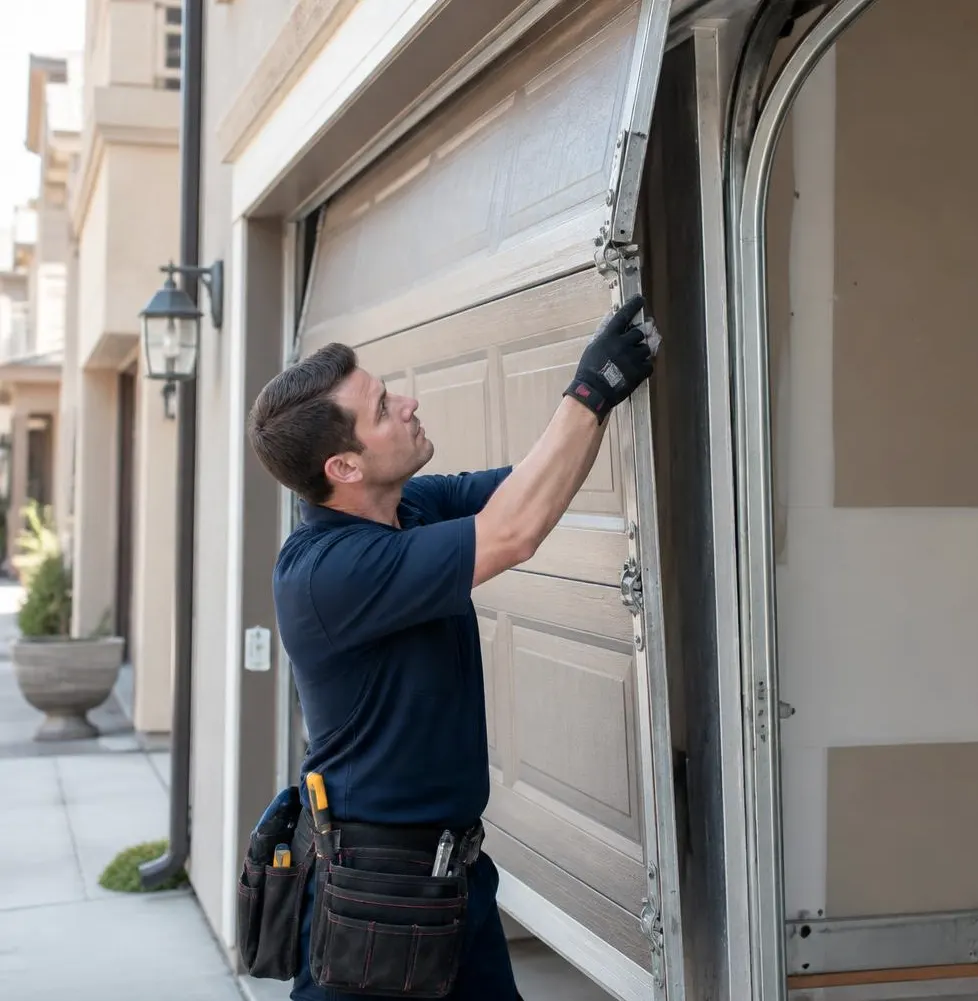
You press the button and the opener groans like it's lifting a car instead of a door. Or maybe the door doesn't fully close on the first try and bounces back up. Or you've noticed the motor running longer than it used to, especially on the muggy afternoons that roll in before a storm. Most homeowners assume the opener is wearing out. Often, the opener is fine — it's just doing a job it was never built to do, because the door itself isn't balanced anymore.
What an Unbalanced Door Does to Your Opener
A properly balanced garage door should feel almost weightless when you lift it by hand. The springs are doing the heavy lifting, not your opener's motor. When a spring loses tension — from age, from humidity swelling the wood or metal panels, or from the constant expand-and-contract cycle that comes with the Emerald Coast's heat and afternoon downpours — the door stops carrying its own weight. The opener has to pick up the slack.
That extra strain shows up as:
- A motor that runs hotter and louder than normal
- A door that reverses partway down because the opener's force sensors think it hit an obstruction
- A door that drifts open or closed on its own when disconnected from the opener
- Visibly sagging sections, especially on one side
- Opener gears, belts, or chains wearing out years ahead of schedule
An opener isn't designed to be a permanent lifting mechanism. It's designed to move a door that's already balanced. Ask it to do more than that for months at a time and you're looking at a burned-out motor or stripped gears instead of a simple spring adjustment.
Tools You'll Need
- A step ladder tall enough to reach the release cord comfortably
- Work gloves
- A helper, if your door is heavier than average (steel doors with insulation, or oversized two-car doors)
- Nothing else — this test doesn't require touching the springs or cables
How to Test Garage Door Balance, Step by Step
- Close the door completely. Start from a fully closed position so you can see the full range of motion.
- Disconnect the opener. Pull the red emergency release cord hanging from the trolley. This separates the door from the opener's carriage so you're testing the door and springs alone, not the motor.
- Lift the door by hand to about waist height. Use the handle or bottom panel, not the track or hardware.
- Let go and watch what happens. A balanced door will stay put, or drift down only an inch or two. It should not slam shut or shoot upward on its own.
- Repeat at the halfway point and near the top. Balance problems sometimes only show up at certain points in the travel, especially with extension springs versus torsion springs.
- Note which direction it fails. A door that falls shut is under-tensioned. A door that flies upward or feels unusually light is over-tensioned. Either way, something's off.
- Reconnect the opener by pulling the release cord again (or following your opener's manual) and running the door through a normal open/close cycle to see if it's smoother than before.
What a Homeowner Can Safely Do
Running this test is entirely safe and something every homeowner should do once or twice a year, particularly before hurricane season ramps up and again after a stretch of heavy storms. While you're at it, you can:
- Check rollers and hinges for visible rust, which shows up fast near the coast due to salt air
- Look at the bottom seal for gaps that let humidity and water in
- Wipe down tracks and remove debris so the door isn't fighting friction on top of a balance problem
- Tighten visibly loose bolts on brackets, as long as they're not load-bearing spring components
What Needs a Technician
Here's the hard line: never adjust, loosen, or replace a torsion spring yourself. These springs are wound under extreme tension and have caused serious injuries to homeowners who treated them like a simple bolt to tighten. If your test shows the door is unbalanced, the fix is spring adjustment or replacement, and that's technician work every time. Same goes for:
- Cables that look frayed or are riding off their drum
- A door that's off its tracks, even slightly
- Visible gaps or bent sections in the torsion bar above the door
- Any situation where the door won't stay in a half-open position at all, which often means a snapped spring
Why This Matters More on the Emerald Coast
Springs here don't just wear out from age and cycles the way they would inland. Humidity swings cause wood-composite panels to swell and shrink, which changes how much weight the springs are actually lifting. Salt air accelerates rust on spring coils and cable ends, weakening them faster than a drier climate would. And doors rated for the area's wind-load requirements tend to be heavier to begin with, which means an unbalanced door puts even more strain on the opener than a standard residential door would elsewhere. A balance check that might be optional in a mild climate is more of a maintenance basic here.
When to Call Destin Garage Door Pro
If your test shows the door falling, shooting up, or struggling to hold position anywhere in its travel, it's time to call. We'll measure spring tension precisely, check cables and rollers for coastal wear, and either re-tension or replace the springs so your opener goes back to simply moving the door instead of fighting it. If the imbalance has already taken a toll on your opener — grinding gears, a motor that won't lift the door at all, or a unit that's just old and overworked — our Garage Door Opener Installation service can get you a properly matched unit instead of another repair that masks the real problem. We also handle full Garage Door Tune-Up & Maintenance visits that catch balance issues before they turn into a stuck door on a stormy afternoon.
If something felt off during that test, don't wait for it to get worse. Call Destin Garage Door Pro and we'll come take a look — serving Destin, Fort Walton Beach, Niceville, Santa Rosa Beach, Miramar Beach, Crestview, Valparaiso, and Mary Esther.